
SMEDA and ILO Advance SME Formalization under ILO Recommendation 204
Awareness and Training Sessions Held in Lahore and Karachi to Promote Transition from Informal to Formal EconomyThe Small and Medium Enterprises Development Authority (SMEDA), in collaboration with the International Labour Organization (ILO), conducted a series of awareness and training sessions on ILO Recommendation No. 204, titled ‘Transition from the Informal to the Formal Economy.’ These sessions were organized under the joint initiative of ILO and SMEDA, under the ILO-funded project “SME Formalization and Just Transition,” aimed at strengthening enterprise registration, compliance, and sustainable growth across key sectors.
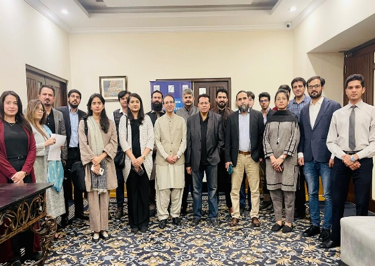
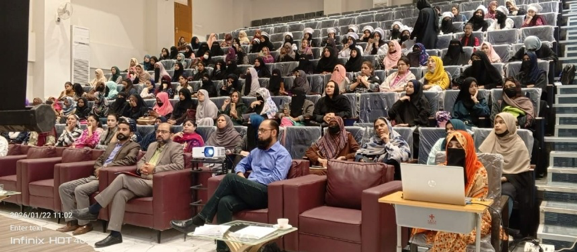
A total of four sessions have been conducted to date, beginning with Karachi in September 2025, followed by Lahore in November 2025, a subsequent session in Karachi in January 2026, and most recently in Lahore in March 2026. Each session brought together representatives from SMEs, sectoral associations, chambers of commerce, employers’ and workers’ organizations, and relevant government institutions. By engaging stakeholders across these major industrial and commercial hubs, the initiative strengthened outreach efforts and fostered coordinated action at both provincial and national levels.
Pakistan’s economy remains largely informal, with a significant portion of enterprises and workers, particularly in the textile, garments, and auto parts sectors operating outside formal regulatory and social protection frameworks. Informality presents barriers to productivity, access to finance, market integration, and compliance with evolving international trade and environmental standards.
Recognizing these challenges, ILO Recommendation No. 204, adopted in 2015, provides a comprehensive framework for countries to facilitate the transition from informal to formal economy through inclusive policies, social protection expansion, enterprise development, and improved compliance systems. The sessions aimed to contextualize these principles for Pakistan and promote coordinated action among stakeholders.
The initiative aligns with Pakistan’s Decent Work Country Programme (DWCP) and supports the objectives of the national SME Policy 2021, which prioritizes enterprise formalization, women’s entrepreneurship, and enhanced competitiveness. The project also responds to emerging global requirements, including supply chain due diligence and sustainability standards affecting export-oriented sectors.
During the sessions, participants were briefed on:
- The principles and policy relevance of ILO Recommendation No. 204;
- The national roadmap for enterprise and worker formalization developed under the ILO-SMEDA collaboration;
- Practical pathways for business registration and regulatory compliance;
- The role of digital tools and supply chain linkages in reducing transaction costs of formalization; and
- The importance of integrating sustainability and just transition approaches into SME development strategies.
The sessions highlighted the critical role of large enterprises and market actors in encouraging formalization within supply chains, particularly in textiles and auto parts manufacturing. By leveraging market concentration and buyer requirements, SMEs can be incentivized to register formally, improve labour standards, and adopt environmentally sustainable production practices.
The training sessions placed particular emphasis on outreach to women entrepreneurs, home-based workers, and youth-led enterprises. These sessions focused on practical guidance for business registration, compliance facilitation, and access to formal markets and support services.
Across all sessions, participants expressed strong interest in collaborative approaches that integrate enterprise development, labour standards, and environmental sustainability. The discussions also identified priority areas for policy support, capacity-building interventions, and strengthened coordination among public and private stakeholders.
The SME Formalization and Just Transition initiative reflects a holistic approach that connects enterprise registration, worker protection, supply chain accountability, and climate resilience. By empowering institutions, social partners, and SMEs with knowledge and practical tools, SMEDA and ILO aim to drive systemic change toward a more inclusive, competitive, and sustainable economy.
Through continued awareness, policy dialogue, and training interventions in Lahore and Karachi, ILO & SMEDA reaffirm their shared commitment to advancing formalization as a pathway to decent work, business growth, and economic transformation in Pakistan.