
SMEDA News
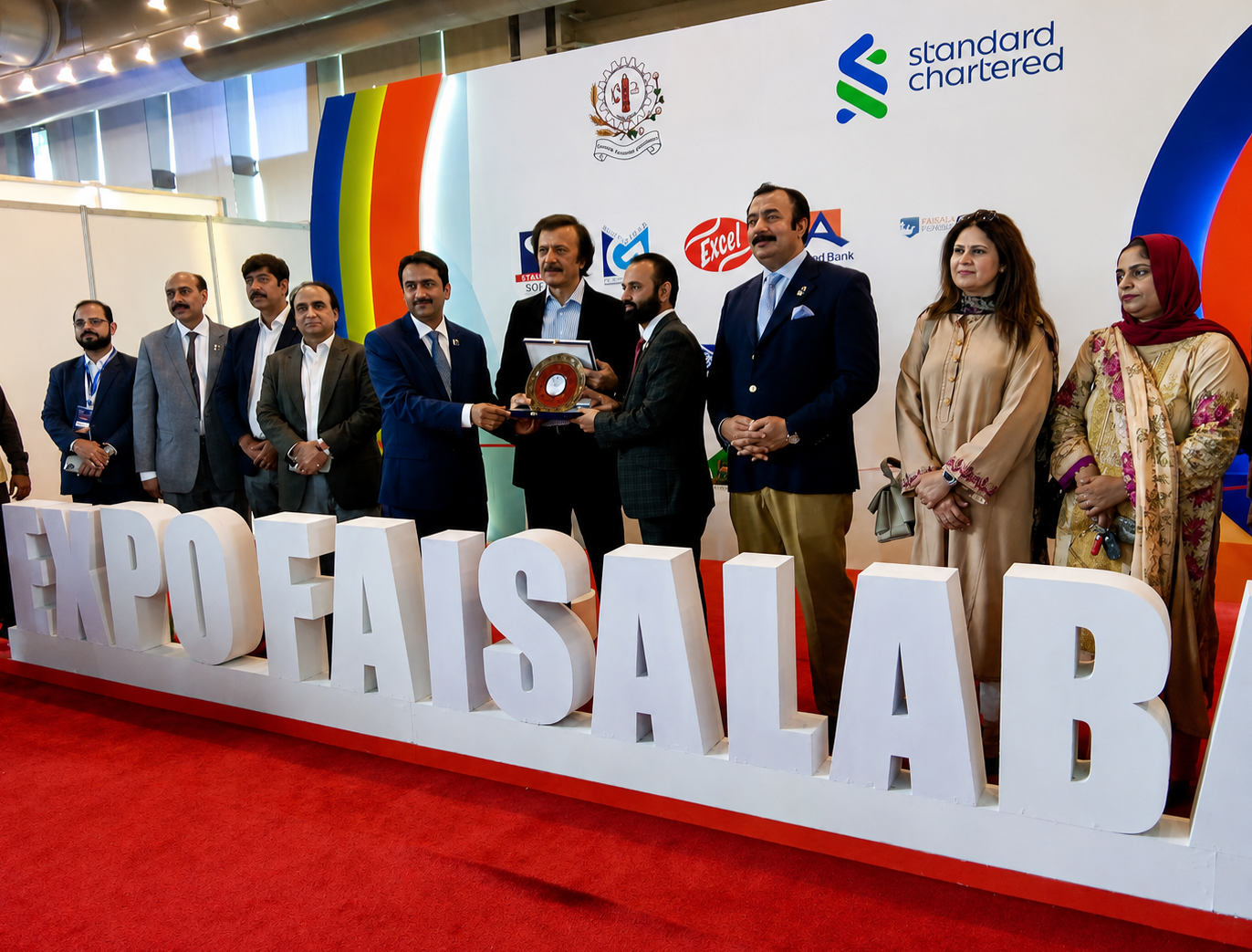
Special Assistant to the Prime Minister for Industries and Production Haroon Akhtar Khan has reaffirmed the government's commitment to building a stronger and more competitive ecosystem for Micro, Small and Medium Enterprises (MSMEs), describing the sector as a cornerstone of Pakistan's economic future.
The “Expo Faisalabad 2026” brought together leading manufacturers, exporters, investors, entrepreneurs and business support organisations, highlighting Faisalabad's industrial excellence while creating fresh opportunities for trade, investment and business collaboration.
Addressing the exhibition, held from July 24 to 26 at the Expo Center in Lahore, the SAPM said MSMEs remain central to Prime Minister Muhammad Shehbaz Sharif's vision for sustainable economic growth, industrial development and export promotion.
He said Pakistan has demonstrated its military strength to the world and the time has now come to showcase the country's economic resilience and development. He praised the Faisalabad Chamber of Commerce & Industry (FCCI) for organising the exhibition, saying Faisalabad continues to serve as Pakistan's industrial and textile hub while making a significant contribution to the country's exports and manufacturing sector.
"Platforms like Expo Faisalabad create valuable opportunities for entrepreneurs to showcase their products, build business partnerships and explore new markets," he said.
The SAPM said the government is placing special emphasis on improving access to finance, encouraging business formalisation, enhancing exports and creating an enabling environment where entrepreneurs can innovate, invest and expand their businesses.
He also acknowledged the Small and Medium Enterprises Development Authority's (SMEDA) active engagement with the business community and its efforts to connect entrepreneurs with government support programmes through exhibitions and outreach activities across the country.
Earlier, SMEDA Chief Executive Officer Nadia Jahangir Seth reaffirmed the authority's commitment to supporting entrepreneurs through strategic partnerships and market-driven interventions.
She said exhibitions such as Expo Faisalabad provide an effective platform for linking entrepreneurs with business opportunities, industry knowledge and government support services. According to her, SMEDA's participation reflects its commitment to promoting business formalisation, improving competitiveness, facilitating market access and strengthening Pakistan's MSME ecosystem through sustained engagement with the private sector.
SMEDA established a dedicated helpdesk at the exhibition, where entrepreneurs and visitors got information about flagship initiatives, government support programmes and business development services. The helpdesk also facilitated free registration of informal enterprises through the SME Registration Portal (SMERP), allowing businesses to formalise their operations and gain improved access to growth opportunities, financing and new markets.
As part of its capacity-building programme, SMEDA conducted training sessions on “Marketing Strategies for SMEs” and “Improving Product Quality for Export Markets”, providing entrepreneurs with practical knowledge to enhance competitiveness and strengthen their presence in both domestic and international markets.

The Small and Medium Enterprises Development Authority (SMEDA) has accelerated efforts to promote business registration through its SME Registration Portal (SMERP), paving the way for enterprise formalization across Pakistan.
The initiative is part of SMEDA’s commitment to providing an enabling business ecosystem to Micro, Small and Medium Enterprises (MSMEs) to help them scale and flourish, thereby contributing to the national economic growth as envisioned by the government.
SMEDA, under the guidance of Ministry of Industries and Production which is advancing Prime Minister Shehbaz Sharif’s vision of achieving inclusive economic growth, is working with a renewed vigour to equip MSMEs with knowledge and tools to become competitive - facilitating their journey through registration.
Entrepreneurs, especially women and budding businesses, are encouraged to register through https://smerp.smeda.org/ or by visiting SMEDA’s official website and take the first step toward being recognized, competitive and future-ready entities.
Why Registration Matters?
Officials engaged in the registration drive say SMEDA, as Pakistan’s premier SME development institution under the MoI&P, is actively engaging entrepreneurs - with special focus on women-led enterprises and micro-businesses - to register themselves through SMERP and become part of the formal economic system.
The registration initiative aims to provide MSMEs with improved visibility, business recognition and access to a wide range of facilitation services that support enterprise development in an increasingly competitive economic environment, they explain.
Speaking about the importance of formalization, CEO SMEDA Nadia Jahangir Seth emphasized that SME registration is not merely an administrative process but a gateway to economic opportunity, business sustainability and long-term resilience.
“Formalization enables SMEs to strengthen their business identity, access finance and markets, improve credibility and participate more effectively in national and global value chains,” she stated.
Ms Seth said SMEDA’s SME Registration Portal offers enterprises a free and simplified mechanism to initiate their formalization journey. “Registered MSMEs can benefit from business advisory services, capacity-building programs, networking opportunities, exposure through trade fairs and exhibitions, and stronger linkages with financial institutions and larger enterprises,” she said.
According to SMEDA officials, formalization is increasingly becoming essential for enterprises seeking integration into modern supply chains and export markets, particularly in light of evolving international compliance requirements related to sustainability, traceability, labour standards and due diligence.
SMEDA-ILO collaboration
SMEDA’s ongoing collaboration with the International Labour Organization aims to strengthen Pakistan’s enterprise formalization agenda. In December 2025, SMEDA and ILO jointly launched Pakistan’s first National SME and Worker Formalization Roadmap under the “SME Formalization and Just Transition” initiative.
The roadmap provides a coordinated national framework to simplify business registration, strengthen labour compliance, support supply chain due diligence and facilitate SME participation in the formal economy.
Pakistan continues to face significant informality challenges, with a large proportion of enterprises and workers operating outside formal systems. This limits access to finance, reduces productivity, weakens competitiveness and restricts compliance with international trade requirements such as GSP+ obligations and emerging sustainability standards.
Through awareness campaigns, training sessions, helpdesk services, digital facilitation tools and policy advocacy, SMEDA and ILO are working together to make formalization more accessible and beneficial for SMEs across sectors including textiles, garments, auto parts manufacturing and services.
Under the collaboration, awareness and training sessions based on ILO Recommendation No 204 on the “Transition from the Informal to the Formal Economy” have already been conducted in Lahore and Karachi, bringing together SMEs, chambers of commerce, worker organizations, sector associations and government institutions.
SMEDA officials note that enterprise formalization contributes not only to business growth but also improved working conditions, social protection, skills development, environmental sustainability and inclusive economic growth.
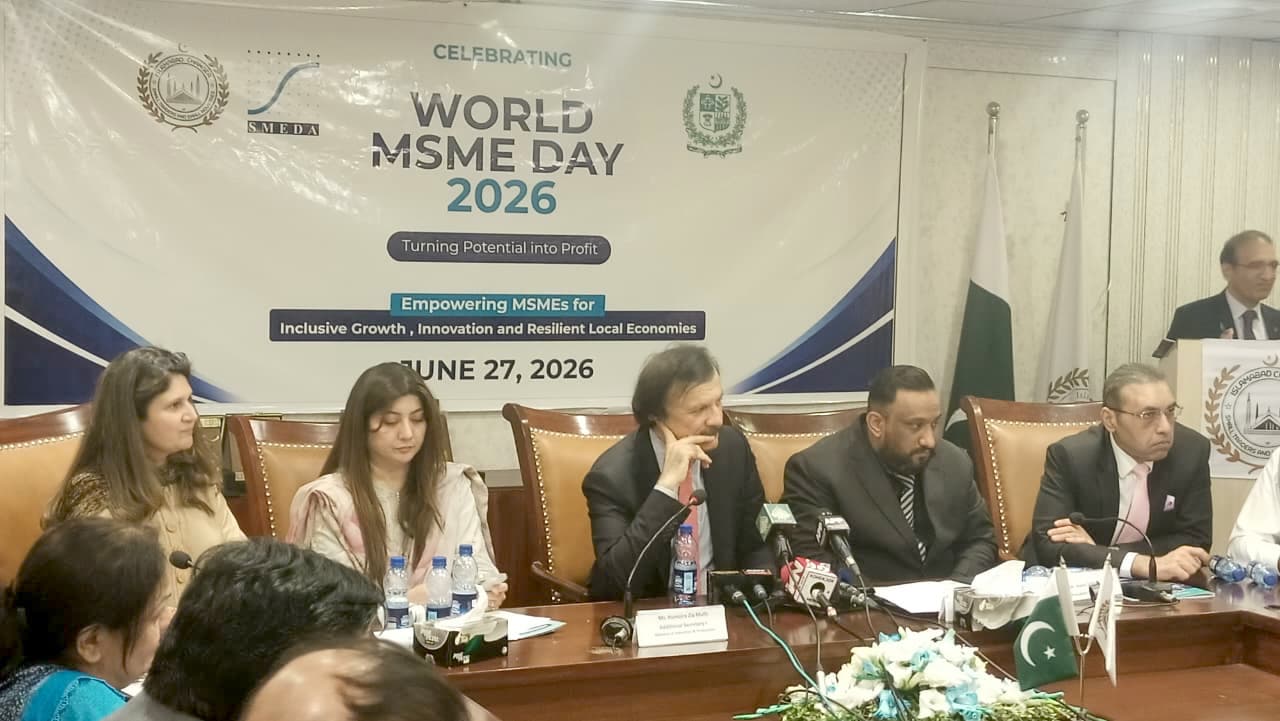
The Government of Pakistan is extending maximum support to the Micro, Small and Medium Enterprises (MSMEs), which have assumed a significant role in steering the national economic growth in these challenging times.
This was stated by Haroon Akhtar Khan, Special Assistant to the Prime Minister for Industries and Production, while delivering the keynote address at an interactive session on World MSME Day 2026.
The Small and Medium Enterprises Development Authority (SMEDA) hosted the session at the Islamabad Chamber of Small Traders and Small Industries (ICSTSI) to promote dialogue and networking to reach out a maximum number of MSMEs for government support.
A brief documentary highlighting SMEDA’s key initiatives set the tone for nationwide outreach activities on the UN-designated day.
The SAPM emphasized that MSME development remains central to the government's economic agenda. Under the leadership of Prime Minister Muhammad Shehbaz Sharif, the government is striving to improve access to finance, promoting business formalization and creating new opportunities for enterprise growth through capacity building and training.
“Access to credit remains one of our foremost priorities, with encouraging growth in lending by banks and microfinance institutions. As per SBP-published data as of March 31, 2026, Pakistan’s SME financing portfolio surges to Rs. 853.94 billion, which was Rs. 584.44 billion on March 31, 2025 - an impressive growth of 46 percent.
“Similarly, the number of SME borrowers rises to 312,355 (as of March 31, 2026), which was 203,139 on March 31, 2025 - an increase of 53.7 percent.”
He said the government is equally committed to providing support to women entrepreneurs and microenterprises, especially those in underserved areas, to ensure a vibrant and globally competitive MSME ecosystem capable of driving inclusive and sustainable economic growth.
He said our collaboration with Alibaba, JICA, PIFD and microfinance institutions was meant to provide a springboard to the MSMEs to gain access to the market.
“The government’s aim is enduring prosperity of our MSMEs,” he said.
Ms Nadia Jahangir Seth, Chief Executive Officer of SMEDA, said World MSME Day provides an opportunity to recognize the resilience, innovation and contribution of millions of Pakistani entrepreneurs to the national economy.
Highlighting SMEDA’s key initiatives being executed under a robust three-year Business Plan, she said the organization, under a renewed vision and strategic direction set by the MoI&P and Board of Directors, was trying to deliver by making MSMEs bankable and digitally equipped, promoting business formalization by offering free registration through SME Registration Portal (SMERP), export readiness, inter-firm linkages and climate initiatives.
She cited key projects, including SME Certification and International Accreditation Grant Programme and a five-year project to convert banana waste into eco-friendly textile.
In the light of the Honourable Prime Minister Shehbaz Sharif’s vision of inclusive economic growth, she said SMEDA was reaching out to women-led and microenterprises to equip them with digital and financial literacy, product development and export readiness, and providing them opportunities for market access, B2B linkages and value chain integration.
Ms. Seth added that SMEDA remains committed to creating an enabling environment that helps enterprises become more competitive, bankable and globally connected.
Meanwhile, Islamabad Chamber of Small Traders and Small Industries President Awais Satti welcomed the government's renewed focus on MSME development and appreciated the initiatives being undertaken through SMEDA.
He said stronger public-private collaboration and improved access to finance and markets are essential for unlocking the true potential of Pakistan's MSME sector.
World MSME Day is observed globally on June 27 to recognize the contribution of MSMEs to employment generation, innovation and sustainable economic growth.
This year, SMEDA organized interactive sessions and discussions in Islamabad, Rawalpindi, Lahore, Faisalabad, Gujranwala, Gujrat, Sialkot, Multan, Sargodha, Abbottabad, Hyderabad, Dadu, Sukkur and Mirpur.
In Lahore, SMEDA, in collaboration with the Lahore Chamber of Commerce and Industry (LCCI), organized a stakeholder engagement session.
Faheem Ur Rehman Saigol, President LCCI, graced the occasion as chief guest and highlighted the importance of entrepreneurship and enterprise development in strengthening Pakistan's economy. He appreciated the role being played by MSMEs in creating employment opportunities, fostering innovation and promoting inclusive economic growth.
Muhammad Javed Afzal, Regional Chief, Central, SMEDA, highlighted the significance of World MSME Day and briefed participants on SMEDA's mandate, services and ongoing initiatives for MSME development.
The session also provided an opportunity for participants to share recommendations aimed at improving the business environment and enhancing the competitiveness of local enterprises.

Reaffirming the government’s commitment to empowering Pakistan’s micro, small and medium enterprises (MSMEs), Chief Executive Officer of Small and Medium Enterprises Development Authority Nadia Jahangir Seth has said that SMEDA is working tirelessly to create an enabling ecosystem that allows MSMEs to grow, innovate and contribute more effectively to the national economy.
She expressed these views during a visit of a SMEDA delegation to the regional office of the Federation of Pakistan Chambers of Commerce and Industry in Lahore. Both organizations discussed avenues for closer collaboration to strengthen Pakistan’s SME sector.
Highlighting the vision of Prime Minister Shehbaz Sharif for economic growth, Ms Seth said SMEDA under the guidance of the Ministry of Industries and Production had undertaken a series of strategic initiatives aimed at unlocking the immense potential of MSMEs across the country.
She said SMEDA’s “SME Development Focus Vision” was designed to support entrepreneurship, promote exports and facilitate business formalization through practical and business-friendly reforms and targeted support mechanisms.
“SMEs are the backbone of Pakistan’s economy and hold tremendous potential for job creation, innovation and export growth. SMEDA is fully committed to equipping them with the tools, opportunities and policy support needed to thrive in an increasingly competitive environment,” she stated.
The CEO highlighted several key interventions introduced by SMEDA, including dedicated initiatives for women entrepreneurs, SME registration and formalization, export promotion support and improved facilitation services for emerging enterprises. She further noted that special measures had also been introduced for entrepreneurs to help ease financial constraints and improve access to economic opportunities.
Speaking on the occasion, Regional Chairman and Vice President FPCCI Zaki Ijaz said MSMEs were globally recognized as a key driver of economic growth, employment generation and entrepreneurship development. He observed that Pakistan’s SME sector continued to play a vital role in supporting economic activity and exports despite facing multiple structural challenges.
He pointed out that SMEs in Pakistan still encounter difficulties including limited access to finance, rising cost of doing business, complicated regulatory procedures, technological adaptation barriers and export-related constraints.
“Pakistan’s sustainable economic progress depends on a strong and resilient SME sector. Strengthening SMEs is essential for enhancing productivity, creating jobs and improving the country’s export competitiveness,” he remarked.
Zaki Ijaz also congratulated CEO SMEDA Nadia Jahangir Seth on being conferred the prestigious Tamgha-e-Imtiaz by the government in recognition of her outstanding services in SME development, public policy and women entrepreneurship promotion.
Senior officers of SMEDA accompanied the CEO during the visit.
At the conclusion of the meeting, SMEDA and FPCCI reaffirmed their commitment to pursuing collaborative initiatives aimed at strengthening MSMEs and enhancing their contribution to Pakistan’s economic growth and prosperity.
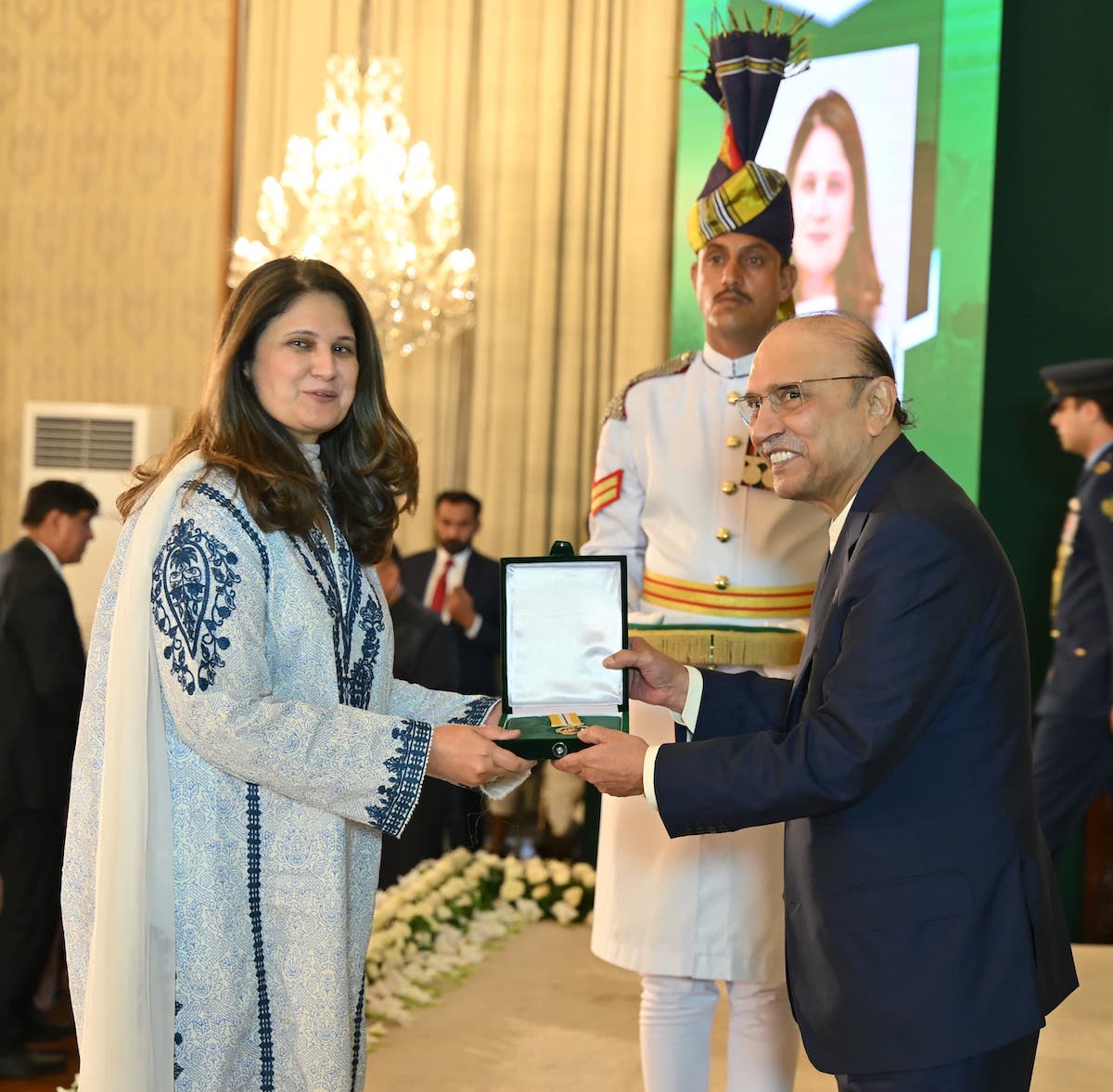
The government has conferred the prestigious Tamgha-e-Imtiaz on Nadia Jahangir Seth, Chief Executive Officer of the Small and Medium Enterprises Development Authority, in recognition of her contributions to the development and implementation of the SME policy and dedicated efforts to promote women entrepreneurship for inclusive economic growth in Pakistan.
The national honour reflects Ms Seth’s visionary leadership and unwavering commitment to strengthening Pakistan’s SME sector, empowering entrepreneurs and advancing inclusive economic development across the country.
Speaking at a post-award meeting, Ms Seth described the recognition as an “honour for the entire institution” and reaffirmed SMEDA’s commitment to accelerating SME development through initiatives aimed at enhancing access to finance and promoting formalization, digital transformation, export readiness and women entrepreneurship.
“We must capitalize on this momentum and step up our efforts to build a stronger, more resilient and globally competitive SME ecosystem,” she said. She added that the organization remains committed to bridging the finance gap, expanding market access and supporting women-led businesses, especially in underserved areas.
Ms Seth said Prime Minister Shehbaz Sharif, during a recent Steering Committee meeting, appreciated SMEDA’s role in SME development, particularly its focus on women entrepreneurs and microenterprises. She noted that the encouragement from the government has further strengthened the Authority’s resolve to undertake transformative initiatives for the sector.
Recognizing access to finance as one of the most pressing challenges for SMEs, she said, SMEDA must step up efforts to strengthen linkages between small businesses and financial institutions for greater inclusion and formalization with concrete results.
She further said, “as women entrepreneurship has remained a central pillar of SMEDA’s agenda, we need to undertake targeted interventions in capacity building, digital and financial inclusion, business development and market access to enable women entrepreneurs to play a more proactive role in the national economy.”
Under the guidance of the Ministry of Industries & Production and in line with the Prime Minister’s vision of a resilient and competitive economy, SMEDA will expedite work on its strategic initiatives undertaken in recent months aimed at improving SME productivity, innovation and market integration to enhance their contribution to the national economic goals, said the CEO.
Later, the SMEDA team felicitated the CEO on the achievement and reaffirmed their resolve to make more meaningful contribution for the promotion and growth of SMEs and micro-businesses.